

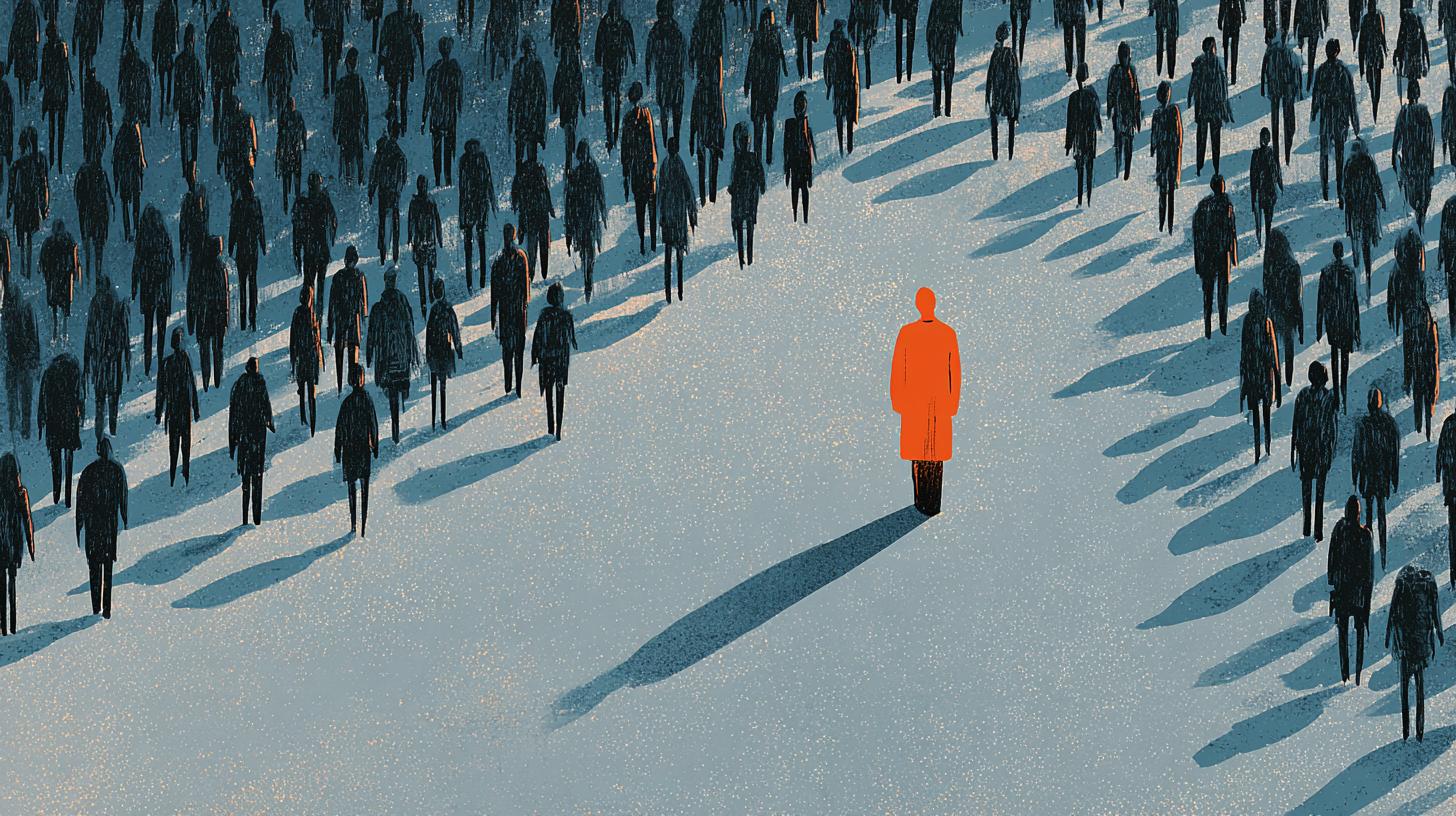
Imagine witnessing someone in serious danger. You look around, expecting another person to help. But everyone else seems to be waiting, too.
Seconds pass. Nobody moves.
It sounds difficult to believe. Yet real-life incidents reveal how easily people can become passive observers, even when someone urgently needs assistance.
This phenomenon is called the bystander effect. Some of the most disturbing bystander effect examples involve ordinary people encountering apparent emergencies without responding immediately.
But people do not always hesitate because they are uncaring. Uncertainty, fear, social pressure, or the assumption that somebody else will take responsibility can influence a person’s actions.
From a notorious murder in New York to incidents captured by surveillance cameras, these 11 stories explore why people sometimes fail to act—and why the reality is more complicated than it first appears.
What Is the Bystander Effect?
The bystander effect is a social-psychological phenomenon in which an individual may be less likely to help a person in need when other people are present.
Psychologists John Darley and Bibb Latané helped establish this concept through research in the 1960s. Their experiments explored how other people’s reactions can shape the way we interpret an emergency.
- Diffusion of responsibility: Assuming someone else will take responsibility.
- Pluralistic ignorance: Mistaking other people’s calm behavior for evidence that nothing is wrong.
- Evaluation apprehension: Hesitating out of fear of embarrassment or making the wrong decision.
These mechanisms do not explain every instance of inaction. A person may be unable to help safely, may not recognize danger, or may have no time to react. Keeping these distinctions in mind is essential when examining actual events.
11 Real-Life Bystander Effect Examples
1. Kitty Genovese (1964): The Case That Changed Psychology

On March 13, 1964, 28-year-old Kitty Genovese was attacked and killed near her home in Queens, New York.
A widely circulated report claimed that 38 witnesses watched her murder without helping. The story became famous and helped inspire psychological research on emergency intervention.
But the version repeated for decades was misleading. Later scholarly analysis found no evidence that 38 people actually witnessed the murder, understood what was happening, and deliberately remained inactive. Some neighbors attempted to respond.
The psychological connection: The case inspired important questions about the influence of groups, but it is not reliable proof that 38 witnesses knowingly ignored a murder.
What it teaches us: Dramatic stories can become accepted explanations of psychology even when key facts are disputed. Source: Manning, Levine and Collins, American Psychologist (2007).
2. Wang Yue (2011): Eighteen Passersby and an Injured Toddler

In October 2011, two-year-old Wang Yue was struck by a vehicle in Foshan, China. The driver left, and the severely injured child remained in the roadway.
Security-camera footage showed a succession of passersby moving through the area without helping. A second vehicle also struck her. In all, 18 people passed the scene before a woman collecting discarded materials came to her aid. Wang Yue later died.
The footage provoked public grief and anger. Yet a camera can show what people did, not definitively why each person did it.
The psychological connection: Diffusion of responsibility or uncertainty may have played a part, although the motivations of individual passersby cannot be established from footage alone.
What it teaches us: Having other people nearby does not guarantee that someone will respond. Source: Sky News (2011).
3. Hugo Alfredo Tale-Yax (2010): The Good Samaritan Left on a Sidewalk

In April 2010, Hugo Alfredo Tale-Yax intervened when a woman was being attacked in Queens, New York. He was stabbed and collapsed on the sidewalk.
Surveillance footage showed people passing him while he lay motionless. Some looked at him; others carried on. Emergency responders eventually arrived, but Tale-Yax had died.
The footage cannot tell us how many people recognized the seriousness of his condition. That uncertainty is part of what makes the incident troubling.
The psychological connection: An unconscious person can be misinterpreted as sleeping, intoxicated, or not needing urgent assistance.
What it teaches us: If someone appears unresponsive, recognize a possible medical emergency and call for help. Source: CBS News (2010).
4. Richmond High School (2009): Violence During a Homecoming Event

In October 2009, a 15-year-old girl was sexually assaulted and beaten on the grounds of Richmond High School in California during a homecoming event.
Police said several people witnessed portions of the attack without promptly reporting it. Authorities investigated accounts of spectators who laughed or took pictures. The victim was eventually found after police received a tip.
The incident shocked the public because of the reported presence of multiple witnesses.
The psychological connection: Social conformity, fear of retaliation, and diffusion of responsibility can create barriers to speaking up, although investigators’ reports cannot prove each witness’s motive.
What it teaches us: In a dangerous situation, reporting the incident to emergency services or trained personnel can be more appropriate than attempting a risky physical intervention. Source: Los Angeles Times (2009).
5. Ki Suk Han (2012): Seconds Before a Subway Train Arrived

On December 3, 2012, 58-year-old Ki Suk Han was pushed onto the tracks at a Manhattan subway station after an altercation.
As a train approached, a freelance photographer captured images of Han trying to get back onto the platform. The photographer said he used his camera flash in an attempt to alert the train operator. Han was struck and killed.
The photograph sparked debate over why nearby people had not rescued him. But by one account, only about 22 seconds passed between the photographer hearing the commotion and the impact. Entering the tracks would also have carried grave danger.
The psychological connection: This was an extreme, fast-moving emergency. It raises questions about intervention but should not automatically be labeled a straightforward bystander-effect case.
What it teaches us: Safe responses—warning transit staff, using emergency systems, and alerting the operator—may matter more than attempting a dangerous rescue. Source: ABC News (2012).
6. Matibool (2016): A Hit-and-Run Victim Ignored in Delhi

In August 2016, a man identified in news reports as Matibool or Matebul was struck by a delivery vehicle while walking along a road in Delhi, India.
Surveillance footage showed him lying injured as people and vehicles passed. Another person reportedly approached and took his mobile phone. By the time Matibool reached hospital, he had died.
The psychological connection: Witnesses may fail to recognize the seriousness of a roadside incident, assume help is already coming, or avoid involvement. The footage does not reveal each person’s reasoning.
What it teaches us: A seemingly motionless person near traffic may require urgent medical help. Source: The Indian Express (2016).
7. Beijing Hotel Attack (2016): A Woman Pleaded for Help

In April 2016, a woman known online as Wanwan reported being attacked and nearly abducted in a Beijing hotel corridor.
Security footage showed a man grabbing her while a hotel employee and other people were nearby. According to reports, the employee interpreted the confrontation as a dispute between a couple and did not immediately help. Eventually, a female passerby intervened.
The video sparked a national conversation about violence against women and the responsibilities of witnesses.
The psychological connection: The belief that violence is a private disagreement can discourage people from recognizing an emergency.
What it teaches us: Don’t assume an apparent assault is harmless because the people might know each other. Source: The Guardian (2016).
8. Shahbad Dairy Murder (2023): Violence on a Public Street

In May 2023, a 16-year-old girl was murdered in the Shahbad Dairy area of Delhi, India.
Footage showed a violent attack in a public area. Police later said that passersby did not promptly call the emergency response number, even after the assault.
The case caused public outrage and raised questions about what witnesses can and should do when violence happens in plain sight.
The psychological connection: Fear, shock, and uncertainty may affect emergency responses, but none can be assigned to particular witnesses without further evidence.
What it teaches us: When approaching an attacker would be unsafe, quickly alerting police and providing an accurate location can still help. Source: The Indian Express (2023).
9. James Bulger (1993): Warning Signs Mistaken for Ordinary Behavior

On February 12, 1993, two-year-old James Bulger was abducted from a shopping center in Bootle, England, by two older boys. He was later murdered.
During the trial, witnesses described seeing him distressed while being led through public areas. Some interpreted the children as relatives and did not recognize the danger. At least one person questioned the boys.
The psychological connection: The case highlights ambiguity and mistaken assumptions, but it was not necessarily a classic situation in which a crowd’s collective inaction discouraged an individual witness.
What it teaches us: Notice signs of distress and seek appropriate help when a child’s safety seems uncertain. Source: The Guardian (1993).
10. SEPTA Train Assault (2021): A Viral Bystander Story That Needed Correction

In October 2021, a woman was sexually assaulted aboard a train in the Philadelphia area.
Initial reports suggested that numerous passengers had ignored the crime while some recorded it. The story spread rapidly as an apparent example of the bystander effect.
But prosecutors later challenged that narrative. The district attorney said the claim that passengers sat filming the assault for their own gratification instead of helping was false. Authorities said the train was sparsely populated, passengers entered and exited at different stops, and an off-duty transit employee contacted police.
The psychological connection: Incomplete facts can make an incident appear to be a clear case of bystander indifference when the evidence is much less certain.
What it teaches us: Verify allegations before judging the actions of witnesses—especially in stories that spread quickly online. Source: The Philadelphia Inquirer (2021).
11. Raymond Zack (2011): Emergency Responders Who Remained on Shore

In May 2011, Raymond Zack entered the waters off Crown Memorial State Beach in Alameda, California, during a mental health crisis.
Police and firefighters arrived but did not enter the water. Emergency personnel cited rescue-training and equipment limitations, as well as safety concerns. A civilian ultimately brought Zack’s body ashore.
An independent investigation later identified breakdowns in communication, training, and emergency-response coordination.
The psychological connection: This is not a textbook example of the bystander effect. It is primarily a case about institutional preparedness and responsibility.
What it teaches us: Effective emergency responses depend on clear roles, resources, training, and coordination—not simply the presence of people willing to help. Source: CBS San Francisco (2011).
What These Bystander Effect Examples Reveal About Human Behavior
Witnessing danger does not always translate into immediate action. Sometimes people fail to recognize an emergency. Sometimes they wait to see how others respond. In other cases, the risks of intervention, uncertainty about the facts, or institutional failures create additional barriers.
That distinction matters. A person who knowingly avoids an emergency may be behaving very differently from someone who does not understand what is happening.
The Smoke-Filled Room Experiment
In a classic 1968 experiment, Latané and Darley studied how participants reacted when smoke entered a room.
About 75% of participants who were alone reported the smoke, compared with only 10% of participants seated with two passive people.
The researchers argued that other people’s lack of reaction can lead someone to interpret a potentially dangerous situation as harmless. Source: Latané and Darley, Journal of Personality and Social Psychology (1968).
Does the Bystander Effect Always Happen?
No. Modern research provides a more encouraging picture.
A study of surveillance footage from 219 public conflicts in the United Kingdom, the Netherlands, and South Africa found that at least one bystander intervened in roughly nine out of ten incidents. The presence of more bystanders was associated with a greater likelihood that someone helped.
That finding does not disprove the bystander effect. It shows that people often do help in real conflicts and that the relationship between group size and intervention depends on context. Source: Philpot and colleagues, American Psychologist (2020).
How to Overcome the Bystander Effect
Awareness alone cannot solve every emergency, but it can make us more willing to recognize when help is needed.
- Recognize possible danger. Do not assume a situation is harmless solely because people around you appear calm.
- Call emergency services. Give an accurate location and describe the situation clearly.
- Ask a specific person to help. Directly assign a safe task instead of appealing vaguely to a crowd.
- Prioritize safety. Avoid entering dangerous traffic, water, or violent confrontations without appropriate training.
- Offer appropriate support. If safe, check on the affected person and remain available until qualified assistance arrives.
Frequently Asked Questions
What is a simple example of the bystander effect?
Imagine someone collapsing in a crowded area while witnesses assume another person has already called for help. That is a hypothetical example of diffusion of responsibility.
What is the most famous real-life example of the bystander effect?
The murder of Kitty Genovese is the most frequently cited case, although the original claim that 38 witnesses saw the murder and did nothing is unsupported.
Why do people sometimes ignore emergencies in groups?
Possible factors include diffusion of responsibility, uncertainty, social pressure, fear of embarrassment, and concern about personal safety. Different circumstances can produce different responses.
Can the bystander effect happen online?
Similar dynamics may appear in group chats or social networks, where users assume someone else will report harassment or offer support. Online situations may also involve distinct psychological factors.
Can the bystander effect be prevented?
Training, clear emergency procedures, recognizing potential danger, and asking specific individuals for help can reduce barriers to intervention.
Final Thoughts
The most unsettling part of these bystander effect examples is how ordinary the settings can be: a street, a subway station, a hotel corridor, or a school event.
But these stories also show why simplistic judgments are risky. Some people do nothing; some try to help; others never fully understand the danger. In many actual emergencies, witnesses do intervene.
The bystander effect is not proof that people are naturally indifferent. It is a reminder that social circumstances can influence our decisions when those decisions matter most.
When something appears wrong, assess the situation, protect your safety, and seek appropriate assistance. Sometimes one clear action can help other people recognize that they can act, too.
Other Articles:
7 Signs of Contingent Self-Worth You Might Be Missing
Why First Impressions Are So Hard to Change
25 Psychology of Compliance Examples: Why You Say Yes


Leave a Reply